
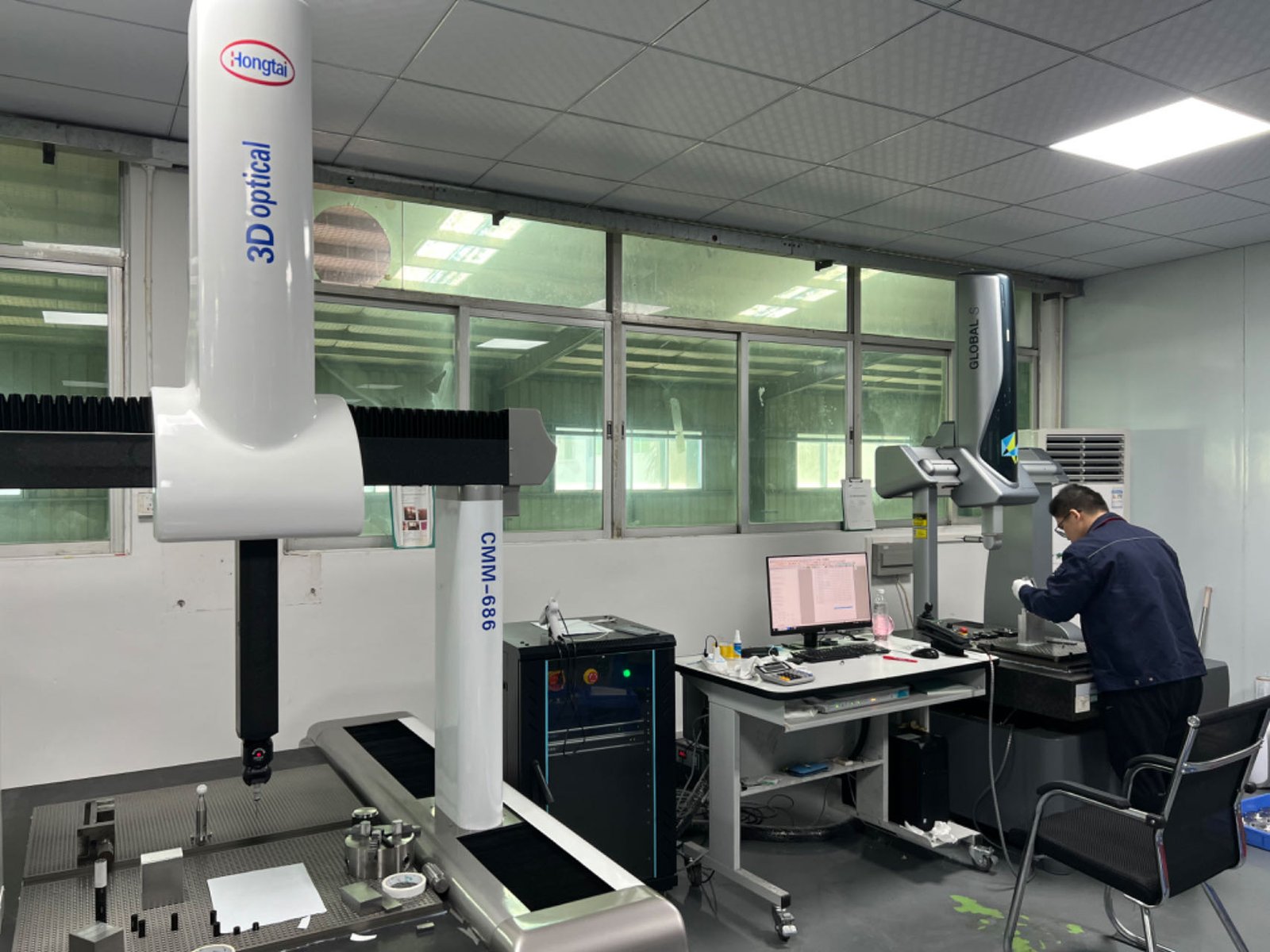
Milled parts are easier to screen than they look, because the requirements are concrete: the axis class has to match the geometry, the CMM has to be able to measure what the drawing demands, and the material control has to exist before the first cut. All of that evidence is available from your desk if you look in the right order. This 30-minute method is built for a buyer with a milled part to quote: five minutes defining what the geometry actually requires, ten minutes checking the machines and measurement equipment behind each candidate, ten minutes sending one benchmark RFQ, and five minutes scoring the replies. The output is a shortlist of two or three milling suppliers worth a deeper audit, and a working list of the signals that should have ended the conversation early.
What should you settle about the milled part before you screen a single supplier?
The first five minutes decide everything that follows, because a supplier can only be screened against a defined requirement. Write down the geometry class your part belongs to — is it a simple prismatic shape that runs on a three-axis machine, a part with drafted faces and angled holes that wants indexed multi-axis work, or a part with swept contours that genuinely needs continuous five-axis cutting? Name the material with its condition, list the key characteristics with their profile and position callouts, and note the quantity and target date. The tolerance reference is fixed: milling holds fit and alignment features to ±0.003 mm, grinding reaches ±0.002 mm, and capability of Cpk 1.67 or higher is the standard on key characteristics, so your list should say which features carry the tight band.
Then decide what "qualified" means for this part. A prototype bracket needs a shop that can quote fast and machine it cleanly; a production housing for an audited program needs material traceability, a CMM with calibration records, and first-article evidence. The same screen will not serve both purposes, and trying to make it do so is how the method dissolves into an all-day process. Fix the requirement set first; every later step is a comparison of suppliers against that list rather than against each other's claims.
Which signals on a milling supplier's website deserve trust?
Read the site the way an engineer reads a capability sheet. Trustworthy signals are specific and consistent: a machine list that names axis configurations — three-axis machining centers, 3+2 and five-axis machines — with models and work envelopes; a materials list that includes the alloys and tempers the shop actually runs; a tolerance statement that matches the machining reality rather than promising the impossible; and a quality section with certificate numbers you could verify. A milling service that publishes engineering content about feeds, thin walls, or fixture strategy is showing you how it thinks about work; a site assembled from stock phrases is not.
The decoration is just as recognizable: machine photos with no models, a gallery of glossy parts with no drawing context, superlatives that never resolve into numbers, and claims that shift between pages. Remember what a website cannot prove: that the CMM is calibrated this quarter, that incoming plate is actually verified against its certificate, or that the five-axis machine in the photo is still in the building. The website's only job is to decide who earns the benchmark RFQ. The proof comes from the live video, the paperwork sample, and the replies to your questions.
How do you verify a supplier can actually produce your geometry?
The fastest test is a live video walk-through, and the way the request is handled is itself a signal. A real milling shop shows its machining centers running, the tooling and fixture area, the inspection room, and a spindle close enough to read the machine model — usually within a day. Ask to see a part like yours in the fixture, and ask which axis class the shop would use for your geometry and why. The answer should reference your features: a flat bracket runs on the 3-axis, this drafted face wants 3+2 indexing, this contour is continuous five-axis. A shop that quotes every geometry on the same machine has not planned your part.
Then verify the measurement side, because milling quality is proven in the quality room. Ask which instruments measure the true positions and profiles on your drawing, whether the CMM is in-house and on a calibration schedule, and how the shop probes an angled feature in the drawing's datum frame. Ask for photographs of past work similar to yours with the drawing or program visible, and check the entity: the business license name should match the quotation and the factory address, and if the site belongs to a trading company it should say so and name its factory. None of this is intrusive; a shop that sells milling for a living answers every one of these questions from memory.
Which quality and measurement questions separate a real milling shop from a reseller?
Start with the quality system and verify it by number with the issuing registrar — a system such as ISO 9001:2015 is the common baseline for component machining, with IATF 16949:2016 (product design excluded) and ISO 14001:2015 for automotive and environmental scope. A number that resolves cleanly is evidence; a scan with a blurred number is decoration. Then ask the floor questions that matter for milled parts: is incoming plate or bar verified against its certificate with an alloy check such as XRF, are critical dimensions measured in-house on a CMM, and do the inspection reports carry measured values rather than a single line of conformity?
The decisive follow-up is the paperwork sample. Ask for a redacted copy of a completed lot's package — the material certificate, the incoming verification, the CMM report, and the packing list — and read it the way your own inspector will. Do the documents name the same material lot and work order? Does the report show measured values for the profile and true-position features that would be critical on your drawing? A supplier that produces this from its last shipment runs quality as a habit; one that hesitates runs it as an exception. That ten-minute read of one document set tells you more than an hour of conversation about quality.
What should your benchmark RFQ contain, and what do the replies teach you?
Send one real part to every shortlisted supplier with the identical package: the model and 2D drawing, the material grade with its condition, the quantity, the profile and position callouts that matter, and the finish and treatment requirements. Ask every supplier the same three questions: which features would you change or flag, which axis class would you run this on, and what documentation ships with the lot? Same package, same questions, same deadline, that is the only way the replies are comparable, and comparability is the point of the exercise.
Then read the replies for what they reveal beyond the price. A serious milling supplier answers inside two business days with questions that reference your geometry — a corner radius that needs a smaller tool, a thin wall that wants a stress-relieved temper, a profile callout it would verify on the CMM with a specific probing routine. Those questions mean the shop is engineering your part rather than pricing it. A reply with no questions has quoted the drawing blind, and a reply that accepts every callout without comment has priced the worst case. The quality of the questions is the strongest signal in the whole process, because it predicts how the shop will behave when the first article does not go perfectly.
How do you score the quotes for a milled part?
Score each quote against the requirement list you wrote in the first five minutes, weighted for this part. For a part whose value sits in its profile tolerances, the written confirmation of the tolerance bands and the CMM plan outweighs a price difference; for a prototype, speed and communication may outweigh everything. A simple scoring table — requirement, weight, supplier A, supplier B — keeps the decision honest and leaves a record of why you chose what you chose.
Look at structure before price. A milling quote that itemizes material, machining by operation, finishing, inspection, and freight, states the Incoterm, and confirms or flags each tolerance in writing is a quote you can compare. A lump sum with no breakdown is not cheaper — it is unknowable, and the uncertainty will surface on the first article. Price the total delivered cost at your quantity, add the documentation you requested to every candidate's reply, and drop any supplier that was evasive on tolerance, axis class, or lead time. The two or three that survive are the ones worth the registrar checks, the reference calls, and the deeper audit that precedes the purchase order.
Which red flags should end the conversation with a milling supplier?
Some signals end the conversation immediately. Full prepayment on a first order is one — the defensible structure is a deposit with the balance against shipping documents or a passed inspection, and a supplier demanding everything up front is asking you to carry the risk. Unverifiable certificates are another. Add to the list a refusal to show the shop live on video, a business license that does not match the quoted entity, a trading company that will not name its factory, and a price that moves between email and formal quotation.
Then the behavioral red flags, and two of them are specific to milling. First, a shop that claims five-axis capability but cannot show a five-axis machine cutting during the video audit, or cannot explain when 3+2 beats continuous five-axis, is overstating its equipment. Second, a quote that agrees with every profile and position callout with no questions has not read your datum structure, and on a milled part the datum structure is where the risk lives. Add the generic warnings: urgency pressure, hidden tooling in the unit price, and a low-ball number far below the pack. Each red flag is a cost you will pay later, and the screen is designed to surface it while the only thing at stake is an email.
What should you verify before the first production order, even after a clean screen?
The screen qualifies a supplier for a conversation; the first order qualifies it for a relationship. Before committing volume, run the checks that no website can replace. Verify the certificates by number with the registrar, run the structured video audit if you have not already, and ask for a reference from a customer with milled work like yours. Sign the mutual NDA before files move. Then place a small first order of the real production part — enough for a first article and a short run — and require the full package before you release the balance: the first-article report with measured profile values, the material certificate with the incoming verification, and the CMM data on your key characteristics.
That first order is a paid qualification run. When the parts arrive, verify them the way your own customer will: re-measure one or two critical features against the report, check the certificate against the drawing, and confirm the drawing revision on the paperwork matches what you quoted. The supplier that survives that test has earned the volume order; the one that does not has cost you a small lot instead of a large one. The quality page on this site explains how inspection and material verification are handled, the factory page shows what a visit or audit would see, and the FAQs cover the tolerance and traceability questions that come up at this stage.
Frequently Asked Questions
What is the difference between 3-axis, 3+2, and 5-axis shops, and which do I need?
3-axis machines cut in three linear directions and need re-clamping to reach other faces; 3+2 machines rotate to fixed angles for drafted faces and angled holes; continuous 5-axis moves the rotary axes while cutting for swept surfaces. Match the class to your geometry and ask the shop to justify its choice. If it cannot explain which class your part needs, it is guessing.
How do I confirm a supplier can hold the profile tolerance on my drawing?
Ask for written confirmation against the profile-of-a-surface and true-position callouts in your datum frame. Milling holds fit and alignment features to ±0.003 mm, with Cpk of 1.67 or higher on key characteristics and Cpk ≥ 1.33 on general characteristics. Capability is reported per characteristic: every report names the feature, its tolerance band, the sample size, the sigma method, and the study window., and grinding reaches ±0.002 mm where a feature needs more. The first-article CMM report with measured values is the proof.
Should I ask for a first article before full production?
Yes, on any order with tight callouts or a new supplier. A first article measured against every critical feature proves the program, tooling, and inspection plan before the run commits material. It also fixes the report format your production lots will follow. One first article is trivial against reworking a production lot.
How can I tell if an inspection report is real rather than generated?
A real report carries measured values against the key characteristics, names the work order and material lot, and references the drawing revision. Check the values are plausible for the process, then cross-check at receiving by re-measuring one or two critical features. The numbers should agree within measurement uncertainty.
What minimum batch should I order as a first test?
Enough for a meaningful first article and a short run — typically a handful of parts — small enough that a problem costs little. The first order qualifies the supplier's process, inspection, and paperwork at a price proportional to the risk. Keep it small until the report, certificate, and delivery all hold up.
Should I sign an NDA before sending my drawings?
Yes, and a reputable shop will sign and return a mutual NDA without argument. Have one in place before the drawing leaves your system. Ask how the supplier stores and controls customer files — the answer tells you whether your IP is treated as an asset or an afterthought.
What payment terms protect a first milling order?
A deposit in the region of 30 percent against the signed purchase order, with the balance against the shipping documents or a passed pre-shipment inspection, is the standard defensible structure. Full prepayment is a red flag on a first order. For larger values, a letter of credit at sight ties payment to compliant documents.
Run the 30-minute screen on us, and on any milling supplier you are comparing.
Email [email protected] or call +86 13126536955 and ask for the video walk-through, the certificate numbers, and a sample lot's paperwork.