
How Much Does CNC Milling Service Cost in 2026? A Buyer's Cost Model
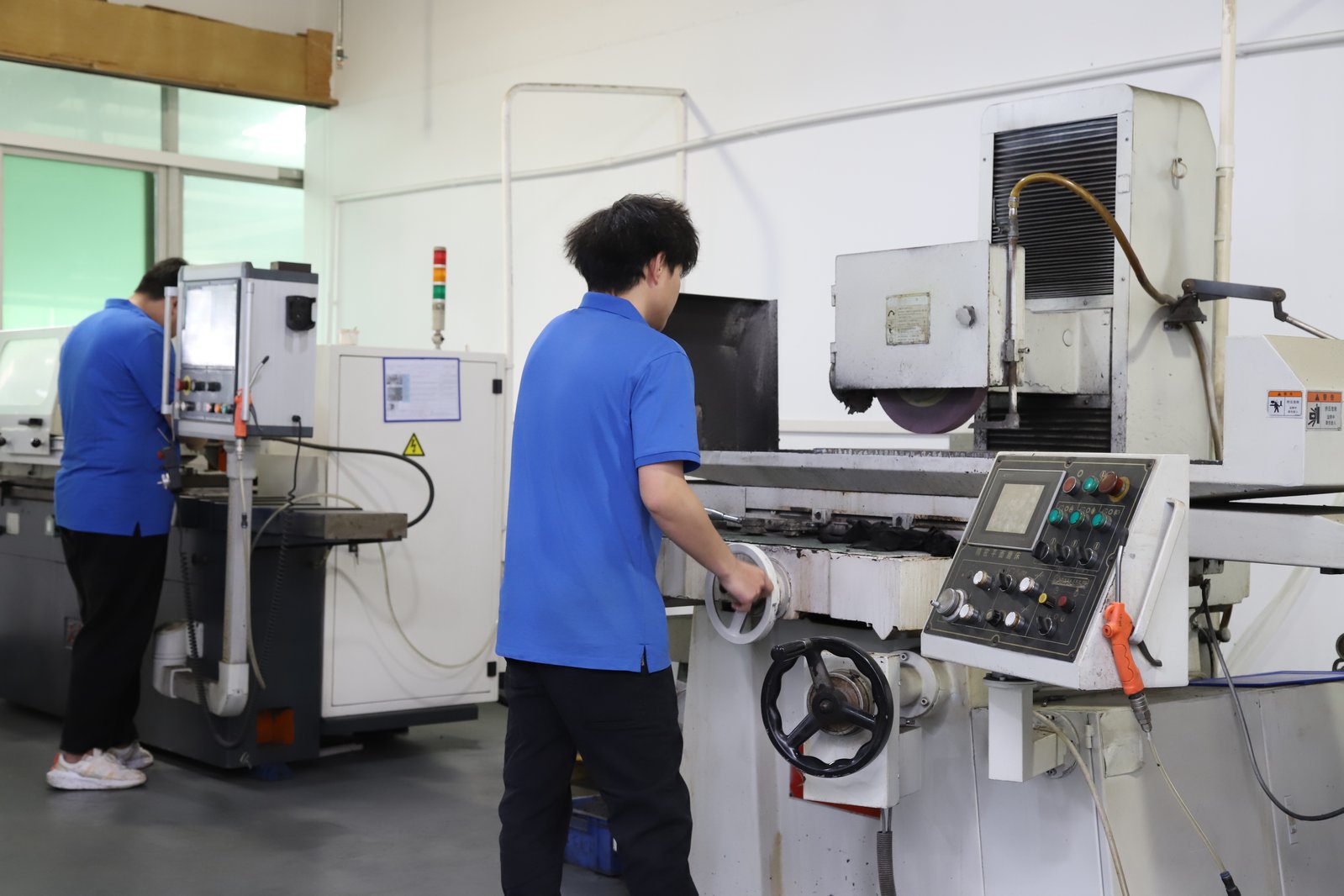
CNC milling is priced at the boundary between what a cutter can reach and what it cannot. A prismatic part with features on several faces belongs on a mill, and its price is decided by a short list of levers: how many setups the geometry forces, how many axes those setups need, how deep and thin the features are, and where the tolerance pushes the work toward grinding. Add a finish callout and the cost conversation changes again — an anodized part is machined to a different size than a bare one, because the coating grows the surface. It walks through the line items inside a milling quote, why the axis count is a setups decision before it is a capability decision, how geometry, material, tolerance, finish, and quantity move each line, and how to build a budget that prices the process route your part actually needs.
What does a CNC milling service quote actually pay for?
Strip any serious milling quote back to its bones and the same lines appear underneath the formatting. Each line has a job, and each line can hide a cost if the service does not name it.
| Line item | What it pays for | What moves it |
|---|---|---|
| Material | The bar, plate, or block at the grade on the drawing | Grade, form, and whether the lot is verified against a mill certificate |
| Setup and programming | Fixturing, toolpath work, and first-piece prove-out | A fixed cost per order that dominates small runs and multi-setup parts |
| Machining time | Spindle minutes to remove material and hold the features | Feature count, pocket depth, wall thickness, and tolerance per feature |
| Secondary operations | Threading, deburring, tapping, and similar steps | Each operation that follows the cut adds its own line and sequence |
| Grinding | The features a mill cannot hold to their band | A separate process family for the tightest tolerances and hardened parts |
| Coating and finishing | Anodizing, plating, and similar surface work | The coating grows the surface, so the allowance has to be machined in |
| Inspection and documentation | CMM time, SPC records, material certificates, reports | Every tight characteristic adds measurement time and proof |
There is no honest single number for CNC milling, because the drawing, the material, the finish, and the quantity decide it together. What stays consistent is the structure, and the structure is what makes a milling quote readable, comparable, and auditable.
Why is the axis count a setups decision before it is a capability decision?
The index of this site frames the first question of any milling job: when is milling the right process, and how many axes does the part actually need? The answer to the second question is the cost model in miniature. A prismatic part whose features all sit on one face belongs on a three-axis mill, where one setup and a simple fixture carry the whole job. A part with features on several faces — a bracket with holes on two sides, a housing that needs its top and bottom machined — may need a fourth axis to index the part, or a fifth axis to reach complex geometry in a single setup. The floor behind this site runs three-axis (50+), four-axis (20+), and five-axis (20+) centers from Mazak, Brother, Citizen, Star, and Tsugami, so the axis count is chosen for the geometry rather than forced by what the shop owns.
The rule to carry into the budget is simple: five-axis reduces setups for complex geometry, and every setup removed is a line removed from the price, but a five-axis hour costs more than a three-axis hour, so the machine only pays for itself when it genuinely collapses the route. A part that needs one five-axis setup instead of three setups on a three-axis machine is cheaper on the five-axis; a simple face-milled plate is not. Ask the service which axis count the quote assumes, and why — the answer tells you whether you are paying for the geometry or for the shop's habit.
Which drawing features quietly add cost on a milled part?
Some features are expensive on a mill for reasons that are not obvious from the drawing, and they repeat across nearly every milling program. Catch them in the design review and the price stops surprising you.
- Internal corner radii. A mill cannot cut a sharp internal corner; the cutter is round, and a smaller radius means a smaller tool, a slower feed, and often a second finishing pass. Open the radius to match standard tooling and the pocket cuts in one pass.
- Deep pockets. Long-reach tooling deflects, vibrates, and cuts slowly. The deeper the pocket relative to its opening, the more the cycle pays for access.
- Thin walls. A wall too thin for the process distorts under the cutter, which forces slower passes and sometimes a second setup to finish the far side.
- Features on multiple faces. Every face that needs machining is a setup or an axis decision — the single largest structural cost in milling.
- Threads and tapped holes. Each thread is a tool and a pass; a drawing full of tapped holes pays for every one of them.
- Features that force a second process. A tolerance or a finish that the mill cannot hold moves the feature to grinding, a separate process family with its own machine and measurement.
None of these are reasons to avoid a milled part; they are reasons to review it while the drawing is still a file. Every feature simplified before release is a tool, a pass, or a setup removed from the route.
Which material should a milling budget assume?
Material moves a milling quote twice: once as stock, and again at the cutting edge. Aluminum 6061 is the general-purpose workhorse — it machines cleanly, anodizes well, and stays the economical default for housings, brackets, and structural parts. The demanding grades — 7075-T6, which is materially stronger and harder to cut; the stainless grades, especially 304 and 316 that work-harden; and titanium — cut slower, wear tools, and push the cycle out on every feature that touches them. The materials list on this site's parts page names the range the floor actually runs, from aluminum and steel to titanium and the engineering plastics.
Two rules keep the material line honest. First, name the grade on the drawing, not the family, and verify the shop checks incoming stock against its mill certificate — every lot on this floor is XRF-verified before it reaches a machine, so the alloy you specified is the alloy that gets cut. Second, think about the starting form: milling from solid begins with bar or plate and cuts everything away, which is the economical route for prototypes and low volumes, while a casting or a near-net blank saves material only when the volume justifies the tooling. The total-cost question is not "which is cheaper per part" but "which is cheaper across the life of the part."
How do tolerance and finish move the price on milled parts?
Tolerance is the steepest part of the milling cost curve. A mill holds ±0.003 mm routinely, so a ±0.003 mm call on a milled feature carries a healthy process capability. Push the same feature toward ±0.002 mm and the mill is stretched across the band — the process must change, and the feature moves to precision grinding, where the tolerance and the finish are held by a different machine and a different measurement. On this floor, milling holds ±0.003 mm and grinding reaches ±0.002 mm, verified on Hexagon CMMs with process capability at Ppk ≥ 1.67 at the initial study on critical characteristics and ≥ 1.33 on general ones.
Finish adds a second layer to the same features. A milled finish that holds its Ra in the cut costs one line; a ground or coated finish adds a process. And a coating callout changes the machining sizes themselves: anodizing grows the surface by an amount that has to be machined in, so a bore held at the cutter is the wrong size after the tank. A part quoted with its coating on the first pass is a part whose price — and whose final dimensions — do not surprise you at the invoice.
How does quantity bend the unit price on milling work?
The setup is the same whether you order one bracket or a thousand: the fixture, the program, and the first-piece prove-out cost the same either way. At one piece, that fixed cost lands entirely on the part, which is why a milled prototype looks expensive. As quantity rises, the setup spreads across the run and the unit price falls toward the sum of the material and the machining time.
Quantity also changes the process decision itself. The index of this site puts the life-of-part question plainly: thousands of identical parts may be cheaper as die castings or injection moldings after the prototype phase proves the design, while a low-volume part is cheaper milled from solid than tooled for casting. Budget the quantity curve, not a single point: prototype on the mill at MOQ 1, prove the design, and only then ask whether the volume justifies a change of process. And budget the reorder at the proven rate — once the fixture and the program exist, the same part ships faster and cheaper, because the setup is no longer a gamble.
What hidden costs sit inside a milling service quote?
The visible lines are half the price; the other half hides in what the quote does not say. A quote that prices per piece but not per part number has hidden the setup you will pay again on the reorder. A quote that absorbs inspection into the margin has hidden the CMM report you will recreate at incoming. A quote that names a finish without its growth allowance has hidden the pre-coating sizes the machinist will have to guess. A quote that prices a tolerance without naming the process that holds it has hidden the grinding step from the total. And a quote from a service that cannot show its machine list, its measurement, or its records has hidden the verification entirely.
The supplier itself is the largest hidden cost of all. This site is built around a traceability claim: every lot is recorded in an MES/ERP system from raw material to operator, so the chain from material to machine to measurement is a record you can open, not a story you hear. The brand behind that system is Dongguan Zhuohang Ltd, founded in 2005, registration number 91441900MA4UWT6X39, operating a 6,800 m² plant in Hengli Town, Dongguan, with 100+ staff, 100+ machines across 3-axis, 4-axis, and 5-axis milling, turning, mill-turn, and grinding, and 20+ inspection instruments. Its certificates carry numbers a buyer can verify: ISO 9001:2015 (116024/A/0001/UK/En), IATF 16949:2016 (product design excluded) (131941/A/0001/SM/En), and ISO 14001:2015 (116024/B/0001/UK/En). When the entity, the floor, and the records are checkable in writing, the margin stays in the quote where you can read it.
How do you compare two milling service quotes on the same basis?
A quote you can compare states its assumptions. Make sure every service shows the material grade and how the incoming lot is verified, the axis count and the number of setups the part will run, the process route for every feature — including which features move to grinding — the tolerance and finish it will actually hold per characteristic, the coating allowance if a finish is specified, and the quantity tier with prototype and production separated.
Compare the itemized routes at the quantity you actually plan to order, because the same drawing at fifty pieces and at five thousand is two different cost problems — the setup is the same, but its weight per piece is not. And weigh the price against the process decision in the same breath. The lowest quote on milling work is rarely the lowest total cost: the part that arrives without its CMM report, its material certificate, or its traceability record is the part you will pay to inspect, sort, or trace yourself. The evidence is part of the product.
How do you build a 2026 milling budget that holds?
Build the budget the way this site reads a drawing — process first, features second, quantity third.
- Classify the part before you fix the number. Is it prismatic, does it need multiple faces, does any feature force a second process or a coating? Send the drawing with the function-critical features marked, and let the service recommend the axis count and the route.
- Get the DFM review on the features that quietly cost. Open the internal corner radii, thicken the thin walls where function allows, and pull the tolerance back to ±0.003 mm unless a feature genuinely earns a tighter band or a ground finish. Fix the drawing first; then budget the fixed part.
- Quote the prototype and the production tier on the same page. The prototype at MOQ 1 proves the route at full setup weight; the production tier shows where the fixed lines amortize, and flags when the volume might justify a change of process. Budget both at your real quantity, and the 2026 number will survive the first invoice.
Keep the closing rule in front of you: read the quote as a process route across a real floor, not a total, and the milling budget you build will hold across the drawing changes, quantity shifts, and reorders that real sourcing always brings.
Frequently Asked Questions
How much does CNC milling service cost in 2026?
No honest service quotes milled parts without a drawing, because the price is set by the material grade, the axis count and setups the geometry demands, the tolerance and finish, and the quantity. A simple 6061 bracket at production quantity sits low; a multi-face part with tight tolerance, a coating, and secondary operations at prototype quantity sits far higher. Budget the route the drawing actually needs.
Why does the same part cost more on a five-axis machine than a three-axis one?
Because the machine hour costs more, but five-axis earns its price when it collapses several three-axis setups into one. The axis count is a setups decision: pay for the extra axis only when it genuinely removes setups from the route.
What tolerances can a milling service hold?
Milling holds ±0.003 mm on critical features, and precision grinding reaches ±0.002 mm where a feature needs it, verified on Hexagon CMMs with process capability at Ppk ≥ 1.67 at the initial study on critical characteristics and ≥ 1.33 on general ones.
Why does an anodized part cost more than the same part bare?
Because the coating grows the surface — anodizing and plating change dimensions by an amount that has to be designed into the pre-coating machining sizes. A coated part is machined to a different size than a bare one, and the allowance is part of the price.
What is the minimum order, and do reorders cost less?
The MOQ is 1 piece, so a single prototype can be run through the exact process route before volume is committed. Once the fixture and the program exist, reorders skip the prove-out and ship faster at a lower per-piece rate.
Which company and certificates back the quote?
The brand behind this site is Dongguan Zhuohang Ltd (registration 91441900MA4UWT6X39), founded in 2005, at a 6,800 m² plant in Hengli Town, Dongguan, with 100+ staff and 100+ machines, certified to ISO 9001:2015, IATF 16949:2016 (product design excluded), and ISO 14001:2015 with verifiable certificate numbers.
Want a milling quote built on the process route?
Email the STEP or IGES model, the material grade, and the toleranced 2D drawing to [email protected] or call +86 13126536955. You will get a process recommendation, a design-for-manufacturing review, and an itemized quote with the prototype and production tiers on the same page.